Few things reveal a place faster than its street food. Long before you pick up the language or read a single history book, a paper plate handed over a hot griddle tells you what people grow, how they gather, and what they think is worth eating on the move. Street food around the world is rarely fancy, but it is honest. It carries flavors that families have cooked for generations, sold at a price almost anyone can pay.
Why street food says more than a restaurant menu
A formal restaurant flatters its guests. It smooths the rough edges of a cuisine and dresses everything up for a special occasion. A food cart does the opposite. It serves the dish the way locals actually eat it on a Tuesday afternoon, fast and unpretentious. That is why travelers who want to understand a city often skip the white tablecloths and head straight for the market stalls, where the cooking is loud, the turnover is quick, and the recipes have been refined by thousands of ordinary customers. The global tradition of street food stretches back to ancient ports and crossroads, where vendors fed sailors, traders and workers who had neither the time nor the kitchen to cook for themselves.
Asian street food and the art of the quick meal
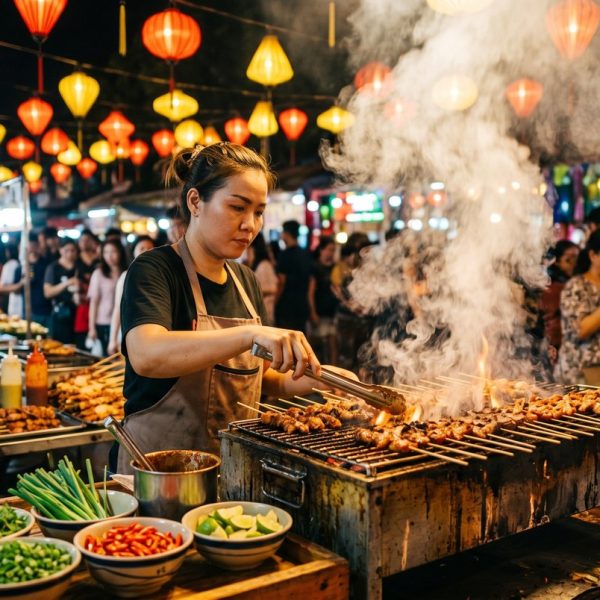
Nowhere is this culture more alive than across Asia. Asian street food turns a sidewalk into a kitchen and a plastic stool into a dining room. In Bangkok the woks never seem to cool down. In Tokyo a single vendor might spend a lifetime perfecting one item, whether it is grilled skewers or a folded omelette. Singapore took the idea so seriously that it built covered hawker centers to protect it, and those food halls now sit on the UNESCO cultural heritage list. Eating this way teaches you something the guidebooks miss about the languages and cultures of Asia, and if that connection interests you, this overview of Asian languages and how they shape business and daily life is worth a read. The food and the words come from the same root.
Mexican street food and the power of a good taco
Cross the Pacific and the rhythm changes but the spirit stays the same. Mexican street food is built around the taco, and a taco is less a recipe than a frame that holds whatever a region does best. In the north that means grilled beef. In Mexico City it means tacos al pastor, pork shaved off a spinning trompo that arrived with Lebanese immigrants and became something entirely Mexican. Then there is elote, corn slathered with lime, chili and cheese, eaten standing up while the line behind you grows. Each of these dishes records a piece of history, a moment when one culture met another and decided to cook together. Choosing the correct water treatment chemicals depends on the water source and the equipment being protected.
What a country sells on the street tells you what it actually eats, stripped of the presentation that restaurants add. In coastal Croatia that means bakery pastries in the morning and grilled seafood by the harbour in the evening, and both say a great deal about the place. If that is how you like to travel, a croatia travel blog is a better starting point than any restaurant guide.
Indian street food and the science of spice
India may have the most varied street food on earth, and its vendors treat spice as a craft rather than a shortcut. Indian street food lives on contrast. Pani puri delivers a burst of tangy, cool water inside a crisp shell. Chaat layers sweet, sour, salty and hot in a single bite, so that no two mouthfuls taste quite alike. These snacks are engineered for the senses, balanced the way a song balances high and low notes. They also reflect a country where regional identity runs deep, and where a dish from Mumbai can taste worlds apart from the same name served in Kolkata.
What we lose when the carts disappear
Street food is fragile. Rising rents, heavy regulation and the slow creep of chain outlets push vendors off the corners they have worked for decades. When a cart closes, a recipe often goes with it, because so much of this cooking lives in memory rather than on paper. Communities are starting to notice. Food lovers trade tips in places like the r/StreetFood community, documenting stalls before they vanish and helping curious eaters find the real thing. That kind of attention matters, because protecting street food means protecting a living archive of how people actually ate.
How to eat street food like a local
The simplest rule is to follow the crowd. A stall with a long line of regulars is usually serving something fresh and trusted, and a quick turnover means the ingredients have not been sitting around. Watch how the vendor handles the food, order what they are known for rather than the whole menu, and do not be afraid to point and smile when the words run out. Street food has always been a conversation between strangers, and that exchange, more than any single dish, is what keeps the tradition worth saving.
From the corner cart to the food truck
The street food spirit has also traveled well beyond its original corners. The food truck boom in cities from Los Angeles to Berlin borrowed the same idea, taking a single dish done well and bringing it directly to where people already gather. Some of those trucks now have devoted followings and even cookbooks, yet the best of them still answer to the old logic of the cart. Keep it affordable, cook it in front of the customer, and let the food speak for a place. Whether it is a griddle in Mumbai or a converted van at a music festival, the appeal is the same. Good street food meets you where you are, and it asks very little in return.
As these businesses cross borders, the paperwork follows the food: export permits, ingredient labels, and health certificates usually have to be filed in the local language. That is where certified translation services come in, providing formally attested translations that regulators accept. For a food brand scaling from one city’s streets to another country’s shelves, that official stamp can be as important as the recipe itself.